
Summary
- Timeline Planning supports offshore bonds as a tax-efficient wrapper.
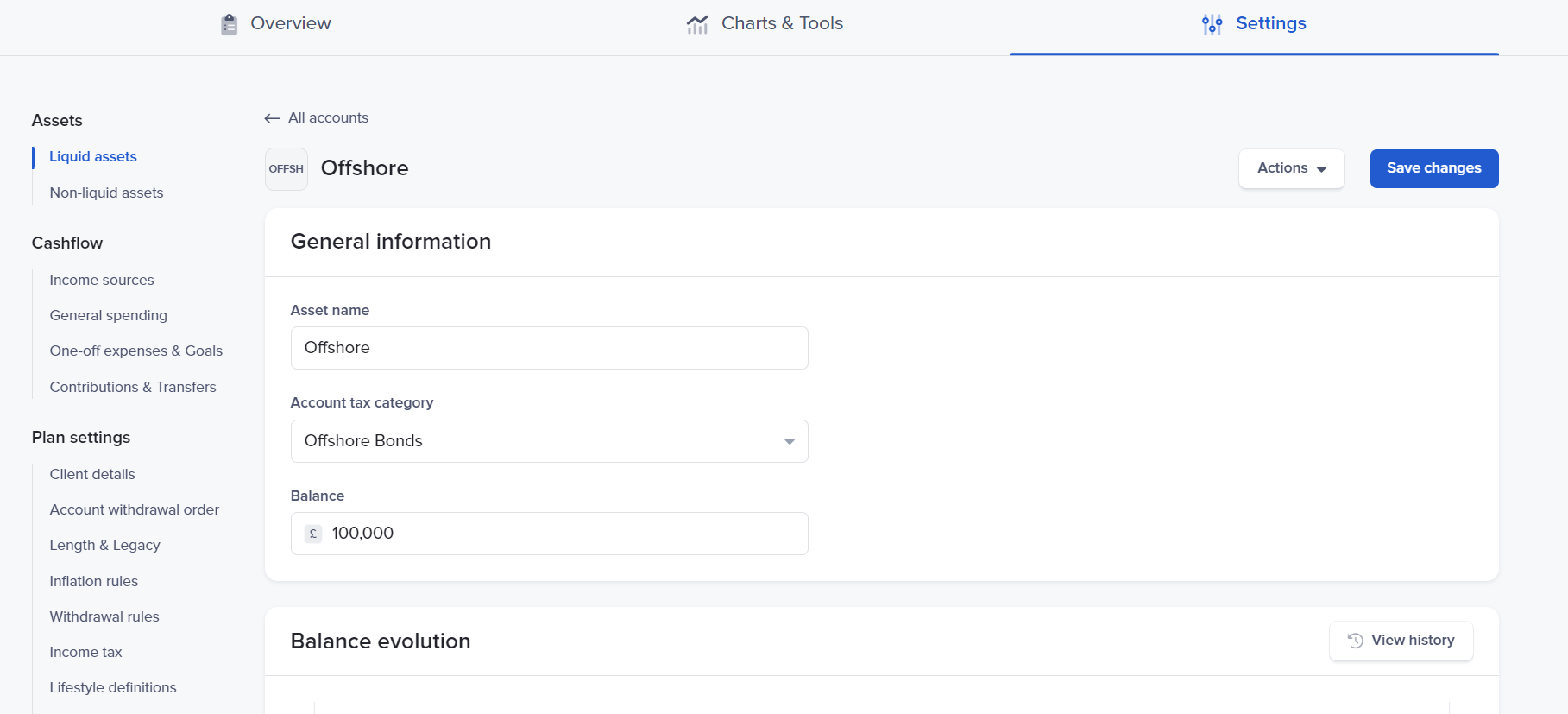
- Users can model both new and existing offshore bonds.
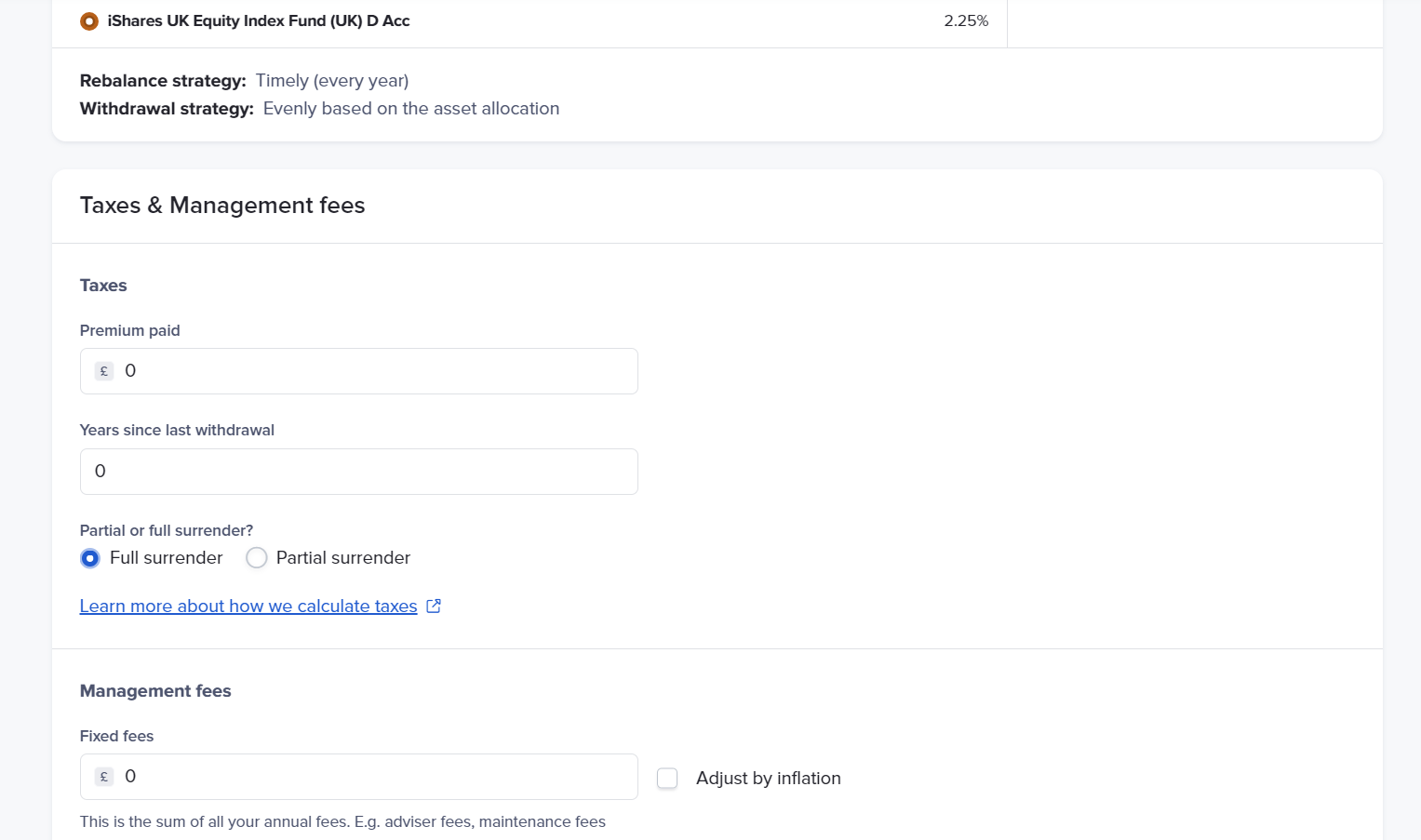
- Withdrawals can be modelled using either partial surrender or segment surrender.
- Partial surrender uses the 5% tax-deferred allowance.
- Segment or full surrender calculates gains based on the profit in surrendered segments.
- Timeline assesses chargeable gains in the context of the client’s wider financial plan.
Description
Offshore bonds can be used in Timeline Planning to model tax-efficient investment wrappers within a client’s financial plan. They are particularly useful where advisers want to demonstrate tax deferral, flexible withdrawals, and the impact of different surrender strategies.
Timeline supports both new offshore bonds and existing offshore bonds. When setting up withdrawals, advisers can choose how the bond is surrendered.
Types of Surrender
There are two surrender methods available in Timeline Planning:
Partial Surrender
With partial surrender, withdrawals are taken proportionally across all segments of the bond. This reduces the value of each segment but does not reduce the number of segments.
Segment Surrender
With segment surrender, entire segments are surrendered. This reduces the number of segments held, while the remaining segments keep their existing value.
Timeline currently supports either partial surrender or segment surrender for an offshore bond, but not both combined.
5% Tax-Deferred Allowance
For partial surrenders, up to 5% of the original investment can be withdrawn each policy year without an immediate tax charge.
Any unused allowance rolls up and can be used in future years. The accumulated allowance determines how much can be withdrawn before a chargeable gain arises.
Ongoing Adviser Fees and the 5% Allowance
Timeline takes ongoing adviser fees from the bond's value, but it doesn't count them towards the 5% tax-deferred allowance. Only the withdrawals set up in the plan are checked against the allowance.
HMRC treats adviser fees paid from the bond as part-surrenders. If planned withdrawals plus fees go over the accumulated allowance, the plan will show less tax than the client would pay. For example, on a £100,000 bond with a 0.75% ongoing adviser fee, the fee uses £750 of the £5,000 yearly allowance, leaving about £4,250 for withdrawals.
Chargeable Gains and Tax Treatment
For partial surrenders, any withdrawal above the accumulated 5% allowance is treated as a chargeable gain. This gain is taxed alongside the client’s other income. Top-slicing relief may apply where the gain pushes the client into a higher tax band.
For segment surrender or full surrender, the gain is calculated based on the profit within the surrendered segments. The 5% allowance does not apply in this case.
How Timeline Applies Tax
Timeline assesses chargeable gains within the full financial plan context. This includes other taxable income sources such as pension income, rental income, annuities, and other taxable withdrawals.
By default, offshore bond gains are taxed after other income and before GIA withdrawals, unless the plan has been customised.
Example
Let’s consider a client who invested £100,000 into an offshore bond.
Under the 5% tax-deferred allowance, they can withdraw up to £5,000 per policy year without an immediate tax charge. If they do not use this allowance for three years, the accumulated allowance becomes £15,000.
If the client then makes a partial surrender of £20,000, the first £15,000 is covered by the accumulated allowance. The remaining £5,000 is treated as a chargeable gain and assessed against the client’s wider income position in Timeline Planning.
Alternatively, if the adviser chooses segment surrender, Timeline calculates the gain based on the profit within the segments being surrendered. The 5% allowance is not applied to this calculation.
Conclusion
Offshore bonds in Timeline Planning allow advisers to model tax deferral and flexible withdrawal strategies within a client’s wider financial plan. The choice between partial surrender and segment surrender can have a significant impact on the timing and amount of tax payable.
Timeline automates these calculations, including the 5% tax-deferred allowance, chargeable gains, and interaction with other income sources, helping advisers produce more accurate and strategic client plans.