
Summary
-
This example demonstrates how the Longevity chart combines survival probability and portfolio sustainability.
-
John (57) and Patricia (56) retire at 65 with a portfolio of £438,426.
-
At age 92, there is a 52% chance one of them is still alive; by 99, this falls to 13%.
-
When survival probability is 50%, the portfolio has a 97% chance of lasting.
-
When survival probability is 10%, the portfolio has a 77% chance of lasting.
-
The probability of running out of money while still alive is significantly lower than portfolio depletion alone.
-
Health assumptions can be adjusted to personalise longevity outcomes.
Description
Imagine you have prepared a plan for John and Patricia.
John is 57 years old, and Patricia is 56 years old. They both retire at age 65.
The plan includes:
-
Planned spending life phases
-
One-off expenses
-
Income sources
-
Total portfolio allocation
-
Total Balance = £438,426
Planned Spending – Life Phases
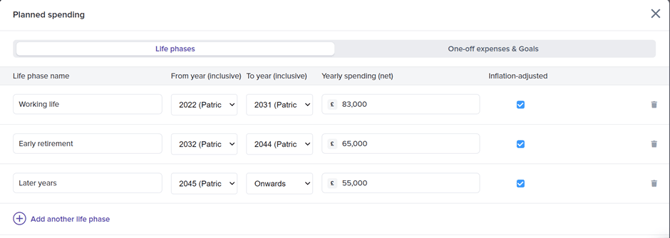
The couple’s spending is structured into three phases.
Each phase has different net spending levels and is inflation-adjusted.
One-Off Expenses & Goals
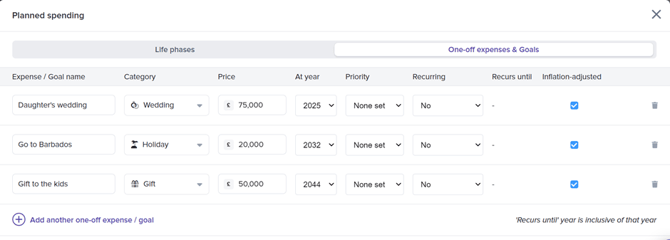
The plan also includes specific one-off expenses
Each expense is assigned to a specific year and inflation-adjusted.
Income Sources
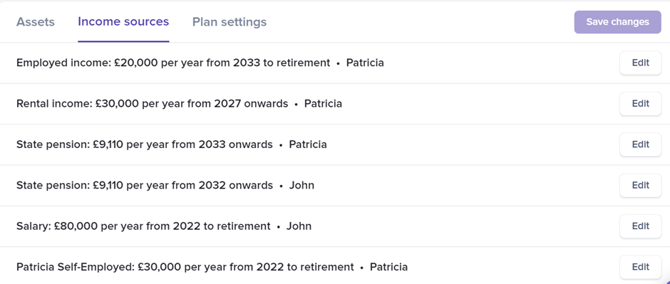
John and Patricia have multiple income streams:
Portfolio Allocation
Their portfolio allocation is diversified across asset classes.

The Longevity Chart
The longevity chart compares survival probability with portfolio success probability:
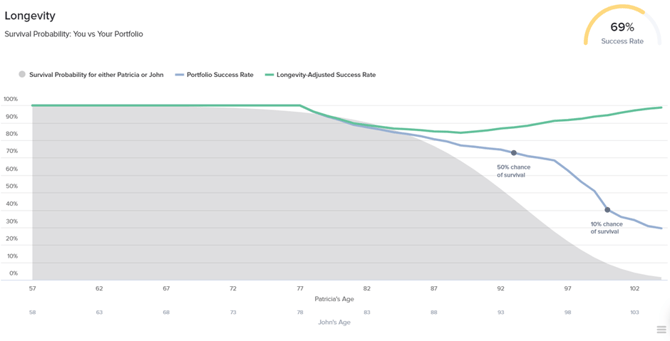
At 92 years old, there is a 52% chance that one member of the couple is still alive.
By 99 years old, this drops to 13%.
The question then becomes:
How long do they want to plan for?
Do they want to plan for that 13% probability? Or for a 10% probability of survival?
You can also look at how likely the portfolio will be sustained at a particular age.
At 76 years old, based on all historical scenarios tested, there is a 99% probability that the portfolio will survive.
For this plan:
-
When there is a 50% chance of survival, the portfolio has a 97% chance of lasting.
-
When there is a 10% chance of survival, the portfolio has a 77% chance of lasting.
If someone has a health issue, such as a smoking history, the plan can be adjusted to reflect that. You can then see how likely they are to run out of money while still being alive.
Planning for Longevity Table
There are also other ways of looking at how long to plan for.
The green line shows there is only a 77% chance of the portfolio surviving until age 100. However, the chance of running out of money and one member of the couple still being alive is much lower.
This is shown in the table below the longevity chart.
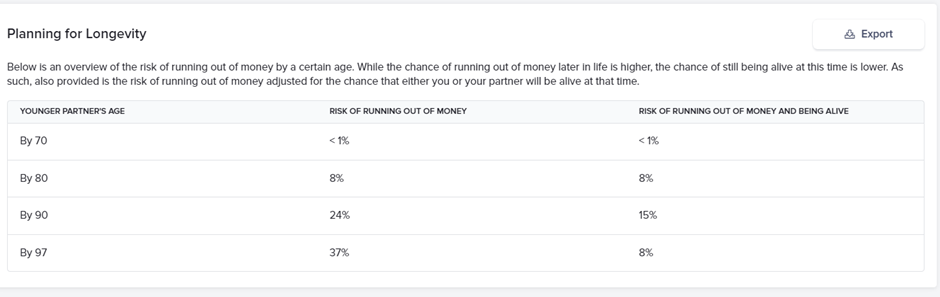
At 97 years old, there is a 37% chance they will run out of money.
But there is only an 8% chance they will run out of money and still be alive.
This means they might decide to plan for their money to last until an earlier age, allowing them to spend more while they are still alive.
Conclusion
The longevity chart helps advisers and clients decide how long to plan for by combining survival probability with portfolio sustainability.
Rather than selecting an arbitrary age such as 100, clients can make an informed decision based on:
-
The probability of survival
-
The probability of portfolio success
-
The probability of being alive and out of money
This allows for a more balanced and personalised retirement plan.