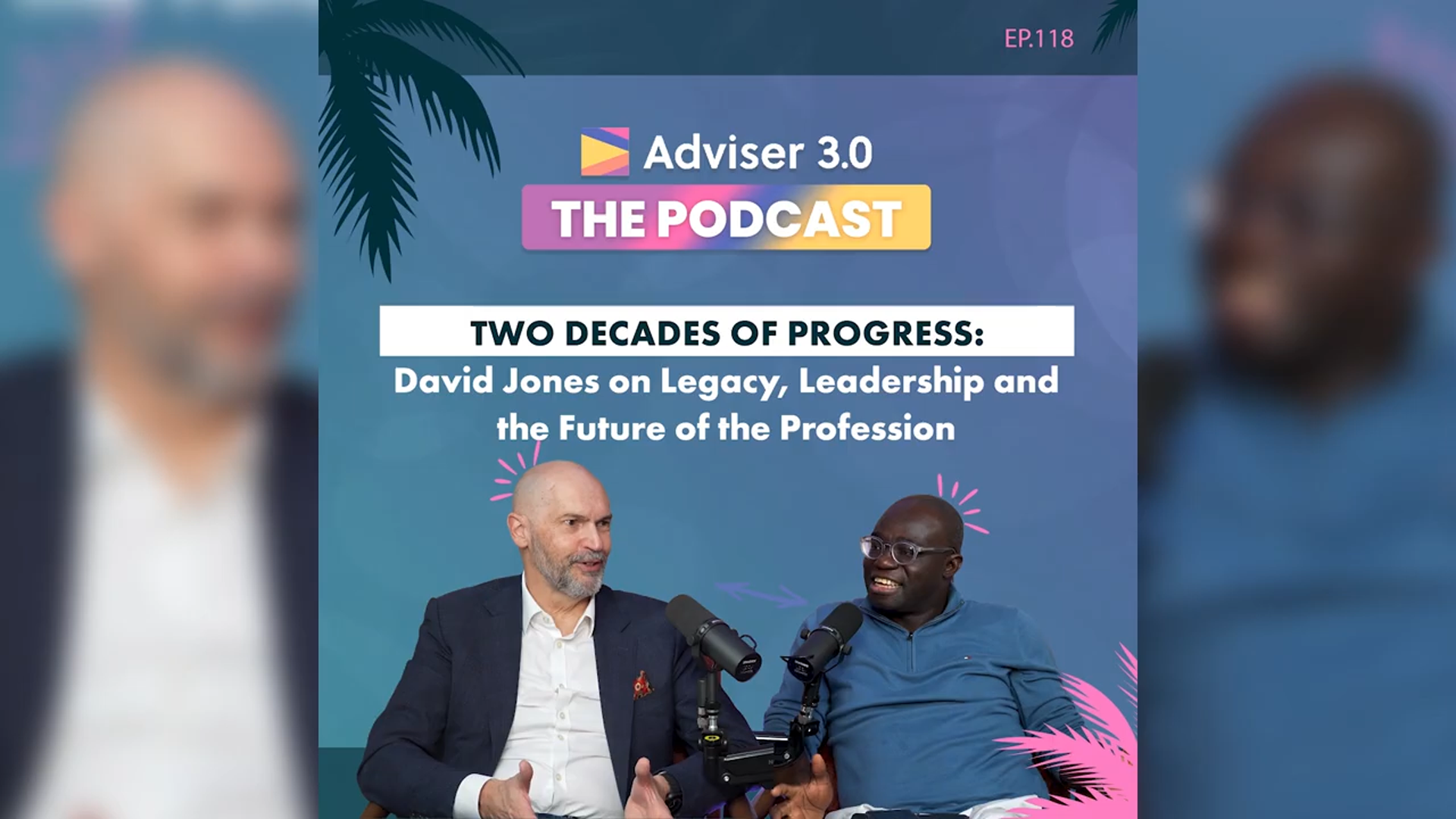
Ep.118 - Two Decades of Progress: David Jones on Legacy, Leadership and the Future of the Profession
David Jones, outgoing Vice President and head of the UK and Ireland advisor group at Dimensional, reflects on how the financial planning profession has transformed over the past twenty years. His insights highlight holistic planning, evolving client needs, the influence of technology and the practices that support long-term firm success.
From Product Sales to Holistic Planning
David outlines the shift from a product-focused advisory model to a profession centred on clients' goals, values and aspirations. Planners now spend more time understanding the whole person, guiding decision-making and supporting long-term outcomes rather than presenting isolated solutions.
The Impact of Younger Planners
Younger planners have brought renewed energy to the profession. Many are drawn to planning because it provides the opportunity to shape clients’ futures in meaningful ways. With only a small proportion of the UK population accessing financial planning, David sees significant potential for growth and new career pathways.
Technology, AI and the Skills Planners Need Next
AI and automation are influencing how planners operate by removing administrative strain and enabling more focus on insight and judgement. David believes future qualifications may evolve to assess communication, decision-making and the ability to interpret complex scenarios, as these skills remain central even with new technological support.
What Distinguishes Successful Planning Firms
Through speaking with firms across the UK, David has identified several traits shared by the most effective businesses. Simplification is central to strong client engagement. Clear processes, consistent delivery and a willingness to implement new ideas help firms build trust and provide dependable planning experiences.
Purpose, Legacy and the Future of the Profession
As David considers his next chapter, he emphasises integrity, clarity and purpose as essential qualities for planners. He remains confident that the profession has a strong future, supported by committed practitioners and substantial unmet demand. Firms that focus on strong relationships, good planning principles and effective use of technology will continue to thrive.