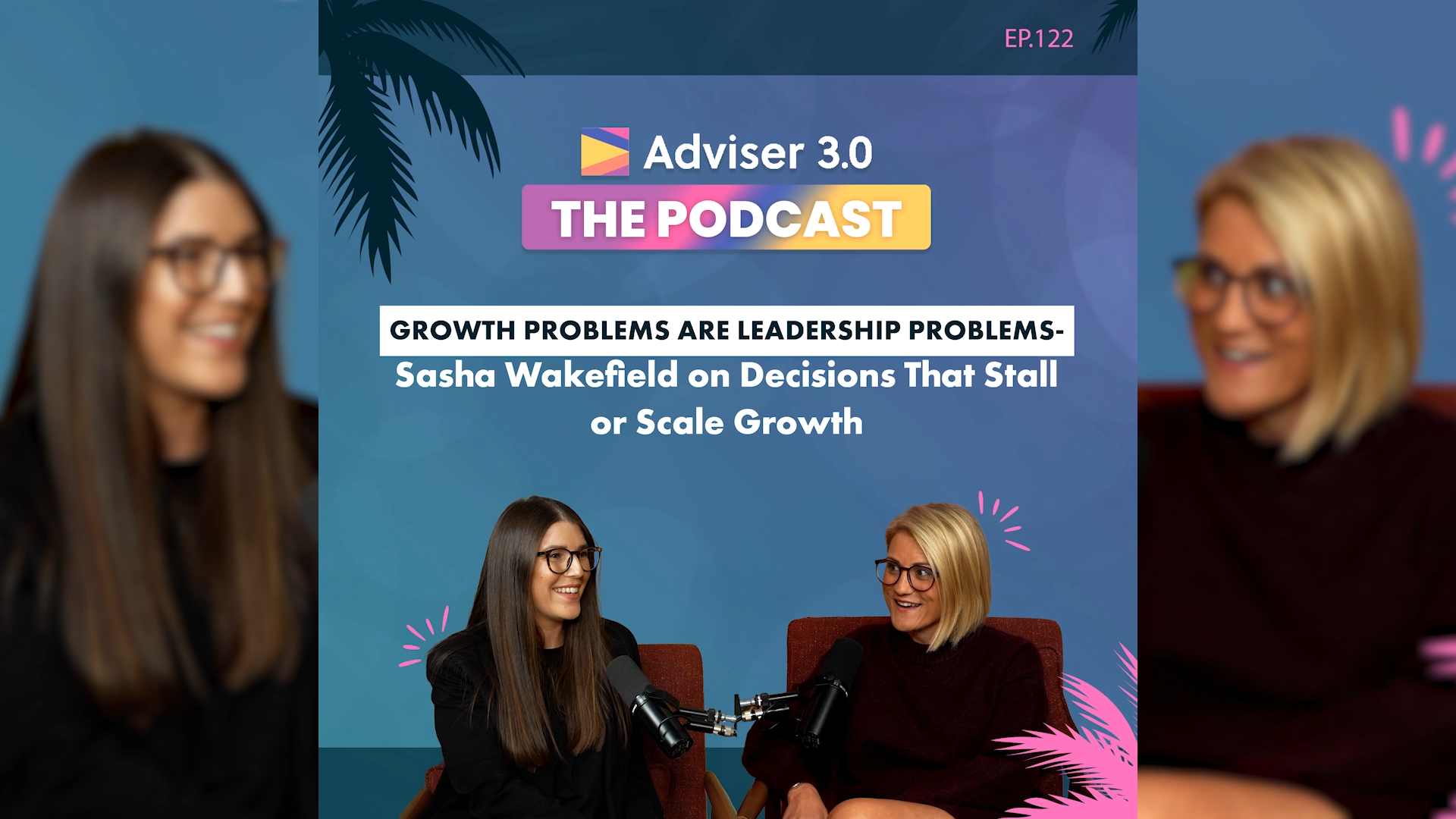
Ep.122 – Growth Problems Are Leadership Problems: Sasha Wakefield on Decisions That Stall or Scale Growth
In Episode 122 of Adviser 3.0 The Podcast, Abraham and Matt are joined by Sasha Wakefield, founder of The Paraplanner Project, for an honest conversation about what growth really demands from leaders in advice firms. The episode forms part of the wider Adviser 3.0 conversation around leadership, scale, and the future shape of advice businesses.
Sasha’s story is rooted in experience rather than theory. Nearly two decades into financial services, she has seen the profession from multiple angles, from platform roles and in house paraplanning to building and leading an outsourced business. Throughout the episode, one theme becomes clear. When growth feels difficult, the underlying issue is rarely workload. It is leadership.
From career curiosity to building a business
Sasha’s route into paraplanning was not a straight line. Like many in financial services, she entered the industry without a long term plan, learning on the job and following her curiosity. What drew her into paraplanning was the mix of technical problem solving and human collaboration. It offered depth, challenge, and constant learning.
That same curiosity later shaped The Paraplanner Project. After working in both in house and outsourced environments, Sasha recognised a gap. Advisers wanted outsourced support that felt like part of their internal team, not a detached service. The business was built to replicate that collaboration, while also giving flexibility to the people delivering the work.
Why growth exposes leadership gaps
As the business grew, the nature of the challenge changed. This is a pattern seen across many UK advice firms as they move from founder led delivery to sustainable scale. Sasha speaks openly about how different leadership feels once responsibility extends beyond yourself. Employing a team brings a new level of pressure. Decisions are no longer abstract. They affect livelihoods, capacity, and sustainability.
One of the most revealing parts of the conversation is Sasha’s reflection on income predictability. Unlike advice firms built on recurring revenue, outsourced businesses often operate month to month. Growth therefore demands sharper planning, stronger discipline, and a willingness to sit with uncertainty. These are leadership skills, not operational ones.
Letting go without losing standards
A pivotal moment in the episode centres on the transition from being the business to leading the business. Sasha describes the anxiety that comes with stepping back from day to day delivery, particularly when clients have built relationships around you personally.
The solution was not control. It was culture. Months were spent preparing systems, behaviours, and expectations so that quality and trust would hold when work was delivered by the wider team. Over time, clients recognised that outcomes stayed consistent, regardless of who they spoke to. Growth became possible because leadership shifted from doing to enabling.
Remote teams, trust, and real connection
Running a fully remote team brings its own challenges, particularly in an industry still adapting to flexible working models highlighted by organisations such as the Chartered Insurance Institute. Sasha is clear that flexibility only works when trust comes first. Without it, distance magnifies every issue.
The episode highlights how intentional leadership needs to be in remote environments. Regular check ins, shared rituals, and space for non work conversation are not soft extras. They are essential to maintaining cohesion and engagement. Growth stalls when leaders forget the human element behind performance.
The changing role of paraplanning
The conversation also explores how paraplanning is evolving, alongside wider changes in regulation, technology, and adviser support models discussed across platforms such as Professional Adviser. With increasing regulatory complexity, technological change, and the rise of AI, the role has become more strategic rather than purely technical.
Sasha addresses the fear many paraplanners initially felt around automation. Her view is pragmatic. The profession is not being replaced, but reshaped. Those who adapt, stay curious, and lean into collaboration will remain central to good client outcomes.
She also touches on the stigma that still exists around outsourcing. Many advisers rely heavily on external partners but hesitate to talk openly about it. Sasha challenges this mindset, arguing that outsourcing, when done well, strengthens advice delivery rather than diluting it.
Curiosity as a leadership advantage
Towards the end of the episode, the focus shifts to career development. Sasha describes curiosity as one of the most important traits for paraplanners and leaders alike. Asking better questions leads to better decisions, stronger relationships, and more resilient businesses.
Her advice is simple. Find environments where collaboration is encouraged and where your voice is valued. Leadership is not defined by title, but by the willingness to take responsibility and think long term.
Final thoughts
Episode 122 is a grounded look at growth through the lens of lived experience and sits alongside other leadership focused conversations on Timeline’s advice insights hub. It reinforces a message many firm owners recognise but rarely articulate. Growth problems are leadership problems.
For advisers, paraplanners, and business owners navigating scale, delegation, or change, Sasha Wakefield’s perspective offers clarity, realism, and reassurance that sustainable growth starts with how leaders think, decide, and show up.