Building a Succession Strategy That Works: Key Lessons from a Real Deal
Succession planning is not a one-off event. For most IFAs and financial advisers, it is a multi-year strategy that shapes what you sell, who you sell to, and what happens to your clients and team afterwards.
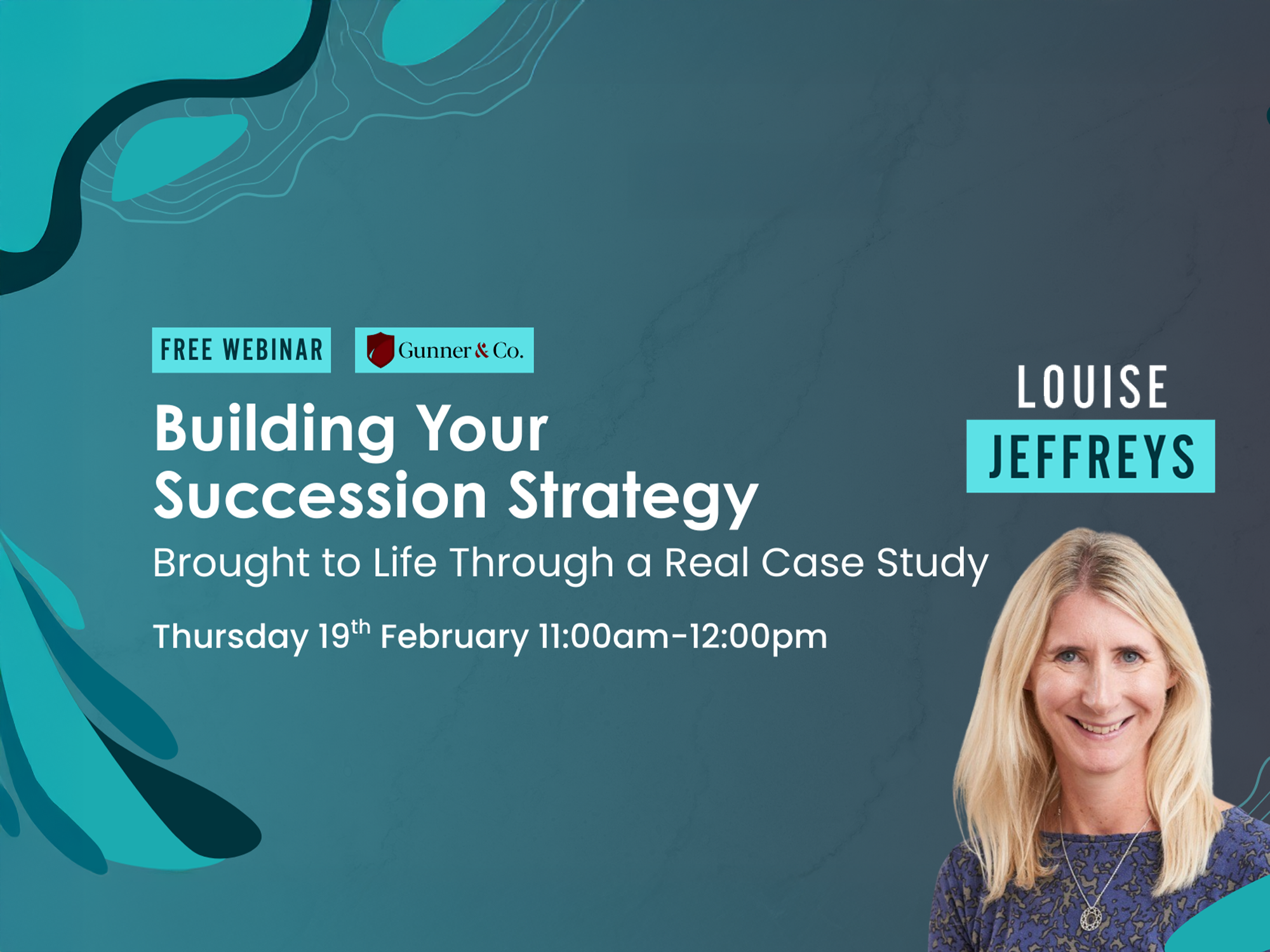
In a recent Timeline webinar, succession specialist Louise Jeffreys shared a practical framework for building a succession strategy, plus an anonymised case study showing what a real transaction looks like from start to finish.
When does succession planning become essential?
Many advisers only start thinking about succession when retirement is close. In reality, the planning window starts much earlier.
- 2 years out: the point where business structure and tax planning can materially affect your net outcome.
- 5 years out: the minimum runway if you are aiming for internal succession, such as a management buyout.
The earlier you start, the more control you have over the outcome. Leaving it late reduces options and increases compromise.
Start with objectives, not valuation
Most advisers start with a number in mind. Stronger exits start with clarity on what success looks like.
Define your objectives across four areas:
- What happens to you: full retirement, phased exit, continuing to advise, or stepping into leadership.
- What happens to your clients: continuity of service, fee positioning, and proposition fit.
- What happens to your team: retention, progression, office presence, and future roles.
- What happens commercially: price, payment structure, and the risk you retain post completion.
A high valuation does not automatically mean a good deal if it creates disruption for clients or staff.
The value drivers that matter most for IFA firms
Buyers do not only buy recurring income. They buy sustainability, profitability, and confidence that the client bank will integrate successfully.
1) Evidence of ongoing service and suitability
Buyers want clear proof that ongoing advice is being delivered consistently, and that annual reviews and suitability are properly documented.
The FCA has increased focus in this area, including through its review of ongoing financial advice services.
It is also worth reviewing the FCA’s guidance on assessing suitability as part of your evidence pack planning.
2) Client segmentation and profitability per client
If you are 2 to 5 years away from an exit, one of the most valuable exercises you can do is a client segmentation review.
Buyers want to understand:
- revenue per segment
- service levels by segment
- profitability by segment
- clients that are structurally loss making
If a client segment is not profitable for you and is unlikely to be profitable for a buyer, it often attracts discounting.
3) Client age profile risk
Buyers increasingly analyse the proportion of funds under advice held by older clients, especially where a high share of assets sits with clients aged 75 plus.
This is not about age alone. It is about whether a buyer can realistically expect a long enough relationship to achieve return on investment.
4) Fee positioning and total expense ratio
Very low all-in fees can create integration risk if a buyer’s proposition is priced differently.
A clear, defensible fee model reduces friction, protects retention, and increases buyer confidence during due diligence.
5) Operational maturity beats proprietary tech
Efficiency and clean operations add value. Proprietary technology built in a smaller firm rarely increases valuation on its own.
Buyers typically already have established technology stacks. What they value most is consistency, documentation, and scalable delivery.
What the transaction process actually looks like
Most IFA business sales follow a similar timeline:
- Preparation: objectives, data readiness, team planning, value improvement.
- Buyer search: structured outreach and qualification meetings.
- Heads of terms: commercial agreement in principle.
- Due diligence: document-heavy evidence stage.
- Legal completion: contracts signed and funds transferred.
- Handover: client onboarding and operational transition.
A common surprise is the workload involved in due diligence. Preparing early reduces stress and avoids last-minute deal risk.
Case study: why strategic fit changes outcomes
In the webinar case study (“Project Lisboa”), the sellers were a multi-adviser firm with several shareholders.
Some shareholders wanted retirement, while others wanted to remain and benefit from growth. The sellers also wanted the office and team retained.
A structured buyer search identified a strong strategic buyer that wanted a footprint in the region. That strategic motivation improved negotiation strength and helped deliver a smoother outcome.
Red flags when choosing a buyer
Succession planning is not only about choosing the highest bidder. A buyer can pay well and still be the wrong fit.
Red flags include:
- a buyer plan that relies on fee increases and high client attrition
- vague commitments around staff, office presence, and service delivery
- weak evidence of cultural alignment
- unwillingness to provide references from previous acquisitions
The simplest test is whether you can confidently explain to clients why the move improves their position.
AI and the future of advice: what it means for succession
AI is already improving efficiency and reducing the cost to serve. That creates more capacity for advisers and can improve consistency of service delivery.
Over time, the market may polarise between commoditised low-cost models and high-value personalised advice.
For most established IFA firms, long-term defensibility comes from service quality, client outcomes, and a proposition that cannot be copied by a template.
Next steps: a 30 day action plan
If your exit is 2 to 5 years away, these are strong first moves:
- run a client segmentation and profitability review
- map client age profile against your intended sale date
- audit your evidence for ongoing service delivery and suitability
- standardise annual review documentation and storage
- build a timeline covering preparation, sale process, and handover
Succession planning rewards early action. Time gives you options, and options give you leverage.