
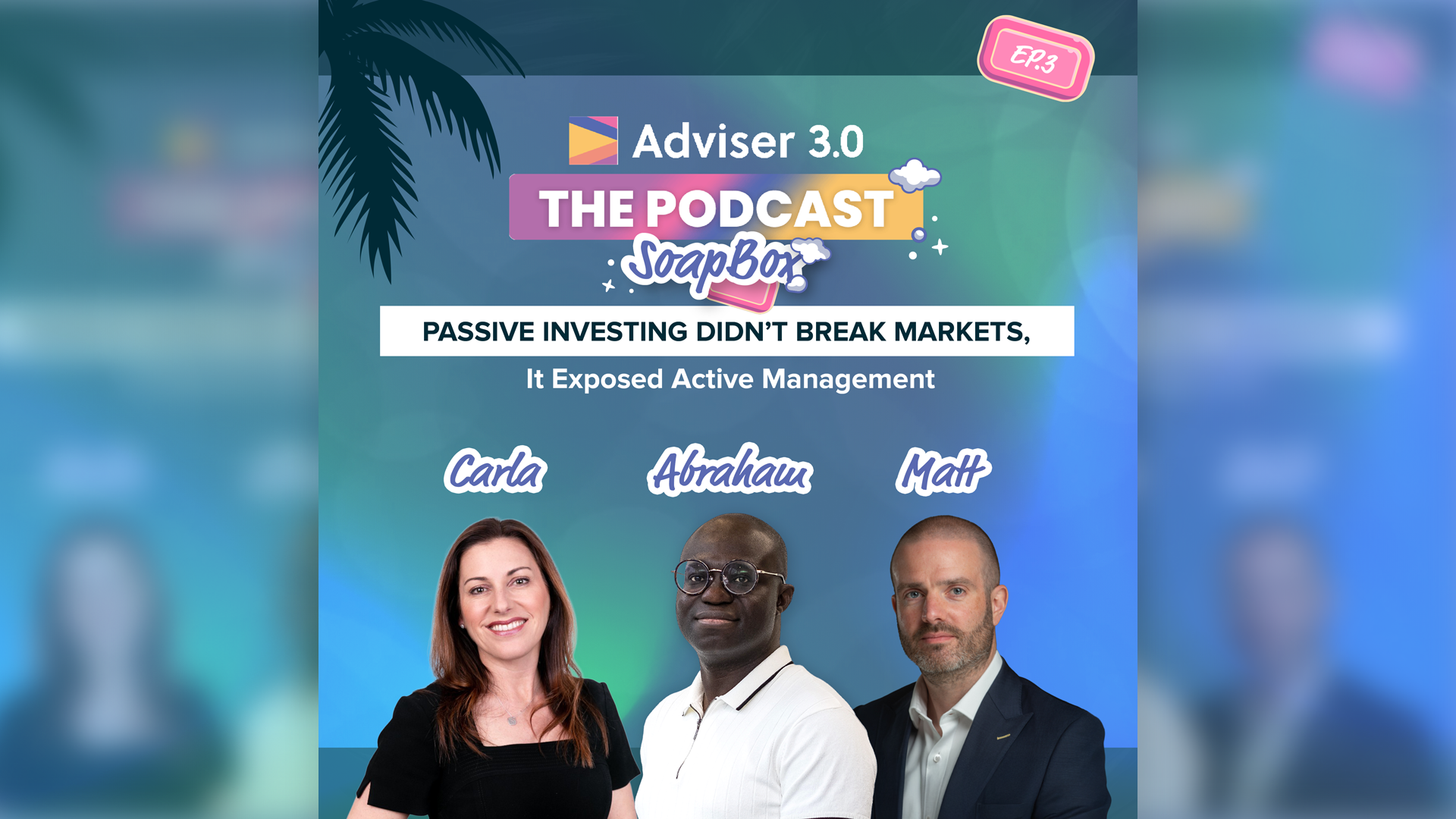
SoapBox Ep.3 - Passive Investing Didn’t Break Markets, It Exposed Active Management
Passive Investing Did Not Break Markets. It Exposed Active Management.
In SoapBox Ep.3, Abraham and Matt are joined by Carla Brown, President of the Personal Finance Society, to examine investor behaviour, market narratives and the growing pressures on the financial advice profession.
The episode opens with a stark contradiction. During a year of strong equity market performance, UK investors withdrew billions from equities and moved into cash. This happened while global markets delivered double-digit returns and the MSCI World Index and FTSE 100 reached new highs.
This was not a response to falling markets. It was a behavioural reaction during strength.
Behaviour Remains the Real Risk
The discussion reinforces a reality advisers see repeatedly. Markets fluctuate, but behaviour drives outcomes. Headlines, commentary and short-term narratives continue to push investors towards poor timing decisions.
Research cited by the Financial Conduct Authority shows emotional decision-making remains one of the biggest drags on investor returns. Access to information has increased, but confidence and discipline have not. For advisers, this is where value increasingly sits.
Passive Investing and Accountability
The episode turns to the active versus passive debate with a focus on accountability rather than ideology.
Passive investing did not distort markets. It provided a clear benchmark. Price discovery remains driven by active participants and professional managers. Industry data from the Investment Association continues to show long-term outflows from active equity funds alongside steady inflows into passive strategies.
A Profession Facing a Pipeline Problem
Carla Brown outlines initiatives such as Pathways to the Profession, aimed at lowering barriers to entry and building clearer career frameworks. Retention depends on mentoring, paid entry routes and structured development.
Advice Still Matters
Advice works, but it does not reach enough people. Those most likely to exit markets at the wrong time are often those without guidance, structure or accountability. The future of advice depends on addressing behaviour, evidence and responsibility with honesty.

.png)