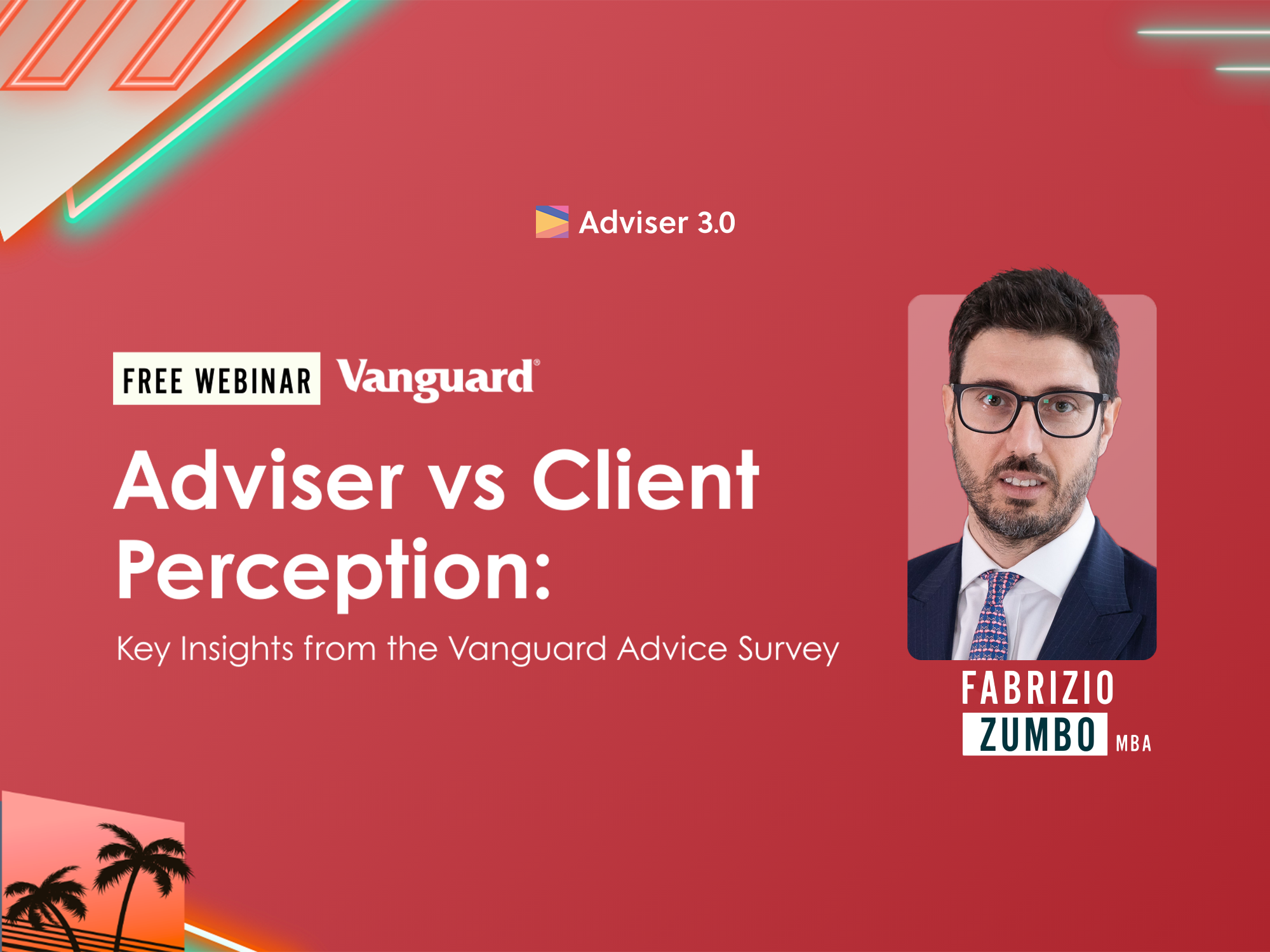
ADVISER VS CLIENT PERCEPTION: KEY INSIGHTS FROM THE VANGUARD ADVICE SURVEY 2025
How Much Value Do Clients Believe Advice Adds?
When investors were asked how much additional annual value their adviser delivers after fees, the weighted average response was 6.5 percent per year.
This figure reflects more than investment performance. Clients associate advice with:
- Confidence in achieving long term goals
- Confidence in retirement income sustainability
- Peace of mind
The implication is clear. Advice value is multidimensional.
For firms using scalable, evidence led portfolios such as those delivered through Timeline, this creates capacity to focus on higher value client work.
You can access Vanguard’s full UK research hub here: Client Connect: The Vanguard Advice Survey.
Why Advisers Lose Clients: It Is Rarely Performance
The research indicates advisers are more likely to lose relationships due to service and personality related factors than portfolio underperformance.
This aligns closely with FCA expectations around ongoing suitability and fair value.
Relevant FCA guidance:
Retention is driven by responsiveness, clarity and perceived attention.
The Meeting Frequency Gap
Investors are more likely than advisers to want face to face meetings more than once per year.
Trust develops through interaction. Frequency signals importance.
Advisers reviewing service tiers should assess whether review cadence reflects client expectations.
For related reading on coaching clients during uncertainty, see: Navigating Geopolitical Risk.
Personalisation: Intention Versus Perception
A notable disconnect appears in personalisation.
Advisers report delivering personalised advice significantly more often than clients report receiving it.
This is rarely a compliance issue. It is a perception issue.
Clients interpret personalisation through context. Referencing prior conversations. Connecting life events to portfolio decisions. Demonstrating continuity.
Technology should support this process, not replace it.
Behavioural Coaching: The Most Undervalued Service
The research confirms behavioural coaching as one of the strongest drivers of long term value.
Investors value advisers who help them:
- Avoid reacting to market volatility
- Avoid chasing short term returns
To support behavioural discipline, advisers increasingly rely on structured portfolio frameworks such as:
This structure enables advisers to focus on higher value human conversations.
Legacy Planning and the Great Wealth Transfer
Legacy and intergenerational planning feature strongly in client priorities.
Investors often want wealth transfer conversations to begin earlier than advisers initiate them.
The scale of generational wealth concentration in the UK is evidenced in the Office for National Statistics Wealth and Assets Survey: Household Total Wealth in Great Britain.
Building structured intergenerational advice propositions is becoming commercially essential.
For insight into building enduring advisory firms, explore: Adviser 3.0.
Reallocating Adviser Time
A meaningful proportion of adviser time remains allocated to administration and investment management.
Automation and outsourcing can release time for:
- Client facing meetings
- Behavioural coaching
- Intergenerational engagement
- Complex planning conversations
The competitive advantage increasingly sits in human centric services that are difficult to automate.
Key Takeaways for UK Financial Advisers
- Clients perceive significant value in advice
- Service quality outweighs performance in retention
- Personalisation perception requires attention
- Behavioural coaching supports long term success
- Legacy discussions should begin earlier
The future of advice is more human, more structured and more relationship driven.