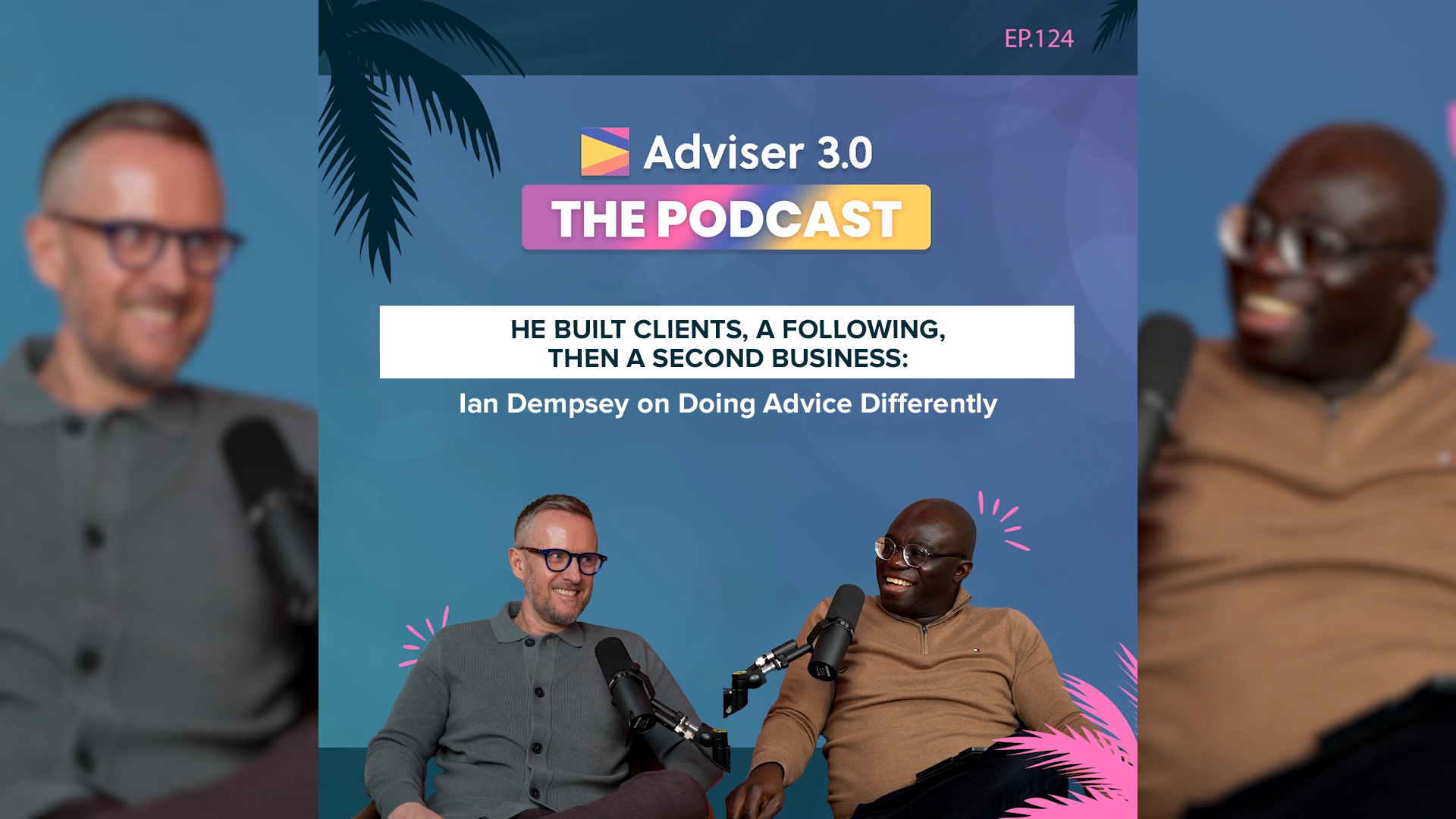
Ep.124 - He Built Clients, a Following, Then a Second Business: Ian Dempsey on Doing Advice Differently
Financial advice has never been short of strong opinions. What it has often lacked is visibility built on credibility rather than noise.
In Episode 124 of Adviser 3.0, Ian Dempsey joins us to unpack what happens when an adviser steps away from restriction, builds independence with intent, and uses content to support a serious advice business rather than chase vanity metrics.
This conversation is not about popularity. It is about control, confidence, and building something that lasts.
Independence is responsibility, not escape
One of the strongest themes in the episode is Ian’s reflection on working within restricted environments. While those years provided grounding, they also shaped the advice he was able to give.
True independence in advice is about client-first judgement rather than product boundaries. Industry bodies continue to stress the importance of independence and transparency in advice, particularly as consumer expectations evolve. Guidance on what genuinely defines independent advice is explored by the Personal Finance Society.
Going independent did not simplify the job. It expanded it. Advice became one part of a wider responsibility that included running a business, managing risk, and making decisions without a safety net.
Followers are not the goal
A common misconception in financial services is that visibility requires scale.
Ian challenges this directly, explaining why a smaller, highly relevant audience often delivers better outcomes than chasing volume. This aligns with how professional platforms such as LinkedIn’s own marketing insights describe authority building through relevance and consistency rather than reach alone.
For advisers, social media works best when treated as a long-term credibility tool, not a short-term performance metric.
Why technical knowledge is not enough
Another defining insight from the episode is Ian’s shift away from viewing technical expertise as the primary differentiator.
Behavioural coaching, psychology, and decision-making support now sit at the centre of how many advisers add value. Research into behavioural coaching shows how advisers improve client outcomes by helping them stay disciplined and focused over time, something explored in depth by Vanguard’s adviser research.
This human element has become a key driver of trust in modern advice relationships.
Building two businesses without dilution
Ian now operates across two clear but complementary spaces: a regulated advice business and a content-led presence focused on education and partnerships.
This separation is intentional. Thoughtful content strategy allows advisers to build authority without compromising compliance, an approach increasingly recommended across the profession, including in guidance from FT Adviser’s marketing and practice management coverage.
A different model for modern advice
This episode is not about copying tactics. It is about understanding principles.
Ian Dempsey’s journey shows it is possible to build clients first, credibility second, and scale in a way that supports both.
Episode 124 of Adviser 3.0 is available now.