Why exit planning should start earlier than you think
Most financial advisers think about exit planning far too late.
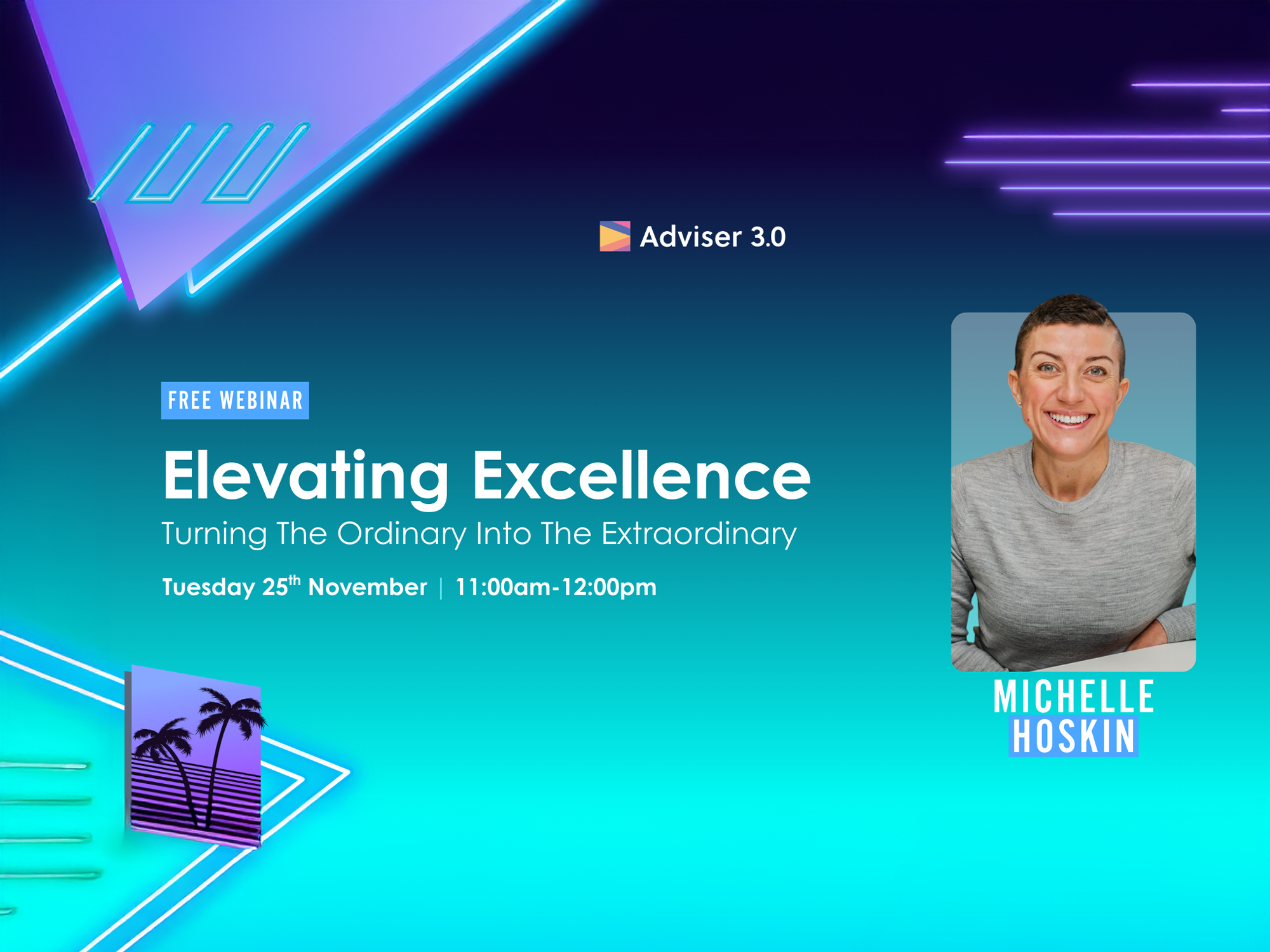
In this webinar, the speaker was Victoria Hicks, Chief Executive Officer at Melo, who shared practical insights from working closely with financial planning firm owners across the UK.
Watch the recap video:
The core message was clear: every adviser will exit their business at some point. The only real question is whether that happens on your terms.
Time is either your biggest asset or your biggest constraint. Start early and you keep your options open. Leave it too late and those options begin to narrow.
As highlighted during the session, many firms only begin planning when retirement is close. By then, internal succession is often no longer viable.
Internal vs external exit: what are your real options?
During the webinar, Victoria outlined two primary exit routes for financial planning firms.
Internal succession can include a management buyout or an Employee Ownership Trust. External succession usually means a sale to a trade buyer or a private equity-backed firm
If you are exploring internal succession, it is worth understanding how employee ownership works in practice.
There is a growing ambition across the profession to build businesses that outlast their founders. However, most firms are not yet structurally ready to achieve internal succession.
What does “exit-ready” actually mean?
A key theme from the webinar was that being exit-ready is not about selling tomorrow. It is about running a business that could be sold at any time without unnecessary disruption or loss of value.
Victoria highlighted several characteristics of exit-ready firms:
- Operational excellence through strong processes, governance and structure
- Clean, accessible data that can be produced quickly when needed
- A clear value proposition with defined target clients and a repeatable service model
- Leadership beyond the owner so the firm can function without one individual
- Reduced key person risk where client relationships are not overly concentrated
Both regulators and buyers expect firms to produce accurate information quickly, and that makes operational discipline increasingly important. You can see the FCA’s broader expectations for firms on its firms guidance pages.
What buyers are really paying for
A standout insight from the session was that buyers are ultimately paying for certainty.
That certainty is built through recurring income, stable profitability, lower transfer risk and clear growth potential. Financial planning firms remain particularly attractive because of their predictable, repeatable revenue and strong client retention.
At the centre of all of this is profitability. Whether the buyer is internal or external, profit underpins valuation. For a useful overview of valuation principles, ICAEW has a guide to business and share valuation.
The most overlooked way to improve valuation
During the Q&A, one of the most practical insights was around fee models.
Many firms undercharge or lack a structured pricing strategy. Reviewing and refining your charging model can significantly improve recurring revenue, provided it reflects genuine client value and a sustainable service proposition.
This also links closely to the FCA’s expectations around fair value under Consumer Duty.
The framework: how to build an exit-ready firm
Victoria introduced a simple but powerful framework:
People - Proposition - Process - Technology
In that order.
Many firms make the mistake of jumping straight to technology. In reality, technology only works if processes are clear, processes only work if the proposition is defined, and proposition only works if the right people are in place.
This framework gives firms a practical way to improve both day-to-day operations and long-term value.
Your timeline matters more than you think
The webinar also broke down how strategy changes depending on how far you are from exit.
- 0 to 1 year: focus on protecting value and tightening compliance
- 2 years: identify gaps and improve attractiveness
- 3 to 5 years: make meaningful structural changes across people, proposition and operations
The earlier you start, the more control you have over your outcome.
Why communication is critical
One of the most overlooked areas is internal communication.
Firms that openly discuss succession planning are better placed to build stronger teams, retain key staff and create future leaders. Without that transparency, uncertainty increases risk at exactly the wrong time.
Final thoughts
The biggest takeaway from the webinar is this: exit planning is not an event. It is a way of running your business.
The firms that achieve the best outcomes are those that build with the end in mind from the start.
For UK financial advisers, that means creating a business that can operate without you, building long-term value rather than relying on short-term fixes, and keeping your options open for the future.