

This year's recommended reading list is a little late and more market-obsessed than previous, perhaps because I’ve been a bit more preoccupied about markets lately. Fear not, in these books you'll find recommendations on how to spend money well, how to actually price what you do, how to survive being wrong for a decade at a time, why buy and hold still wins even when you invest in market peaks, and how one Boston family built the biggest empire in retail investing. Grab a coffee, or a Pimm's if the sun sticks around, and dig in.
The Making of a Permabear: The Perils of Long-term Investing in a Short-term World
Jeremy Grantham, with Edward Chancellor
Grantham, a Yorkshireman who became one of America’s most prominent value managers, is a quant investing pioneer and a professional contrarian who has forecast fifteen of the last three bear markets. He’s been right more than most. His half memoir, half market history was one of the more entertaining reads of my year so far, precisely because I largely disagree with Grantham’s investment philosophy, and nothing sharpens your own thinking quite like sitting with four decades of wisdom contrary to your own worldview.
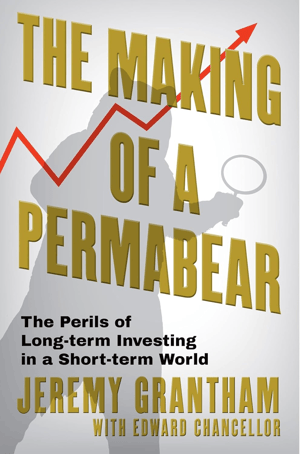
You could call it a cautionary tale for buy-and-hold investors, who Grantham mocked as people who “watch the locomotive coming and get run down in the name of discipline.” Ouch! He takes aim at Eugene Fama's efficient markets doctrine and Jeremy Siegel's Stocks for the Long Run, though it's former Fed chair Alan Greenspan who gets the harshest treatment, blamed for the cheap money that helped inflate the very bubbles Grantham spent his career trying to sidestep. Jack Bogle, tellingly, comes out of the book unscathed.
The theme I enjoyed most is Grantham's unparalleled grasp of the interplay between human behaviour and the asset management business: career risk, his term for why most fund managers would rather be wrong alongside the crowd than right and alone. ‘When you put money into the hands of professionals, the focus gets transferred from real risk to benchmark risk. Risk is not accurately measured by volatility as the finance professors claim. Real risk is mainly career and business risk, which together shape our industry. Everyone’s ultimate job description becomes “keep your job.”’
Grantham is unflinching about what that conviction actually cost him during the tech bubble.
‘The client exodus began as a trickle in 1997 but by mid-1998 the clients were telling us, "Hey, guys, you're underperforming big time. Six points a year, in total." Because the clients were playing golf with people who were making fortunes, their patience wore incredibly thin.
It is often said that managers should avoid underperforming in a bear market like the plague, but it's simply not true. In a bear market clients are paralyzed. They make very few moves and wait until it's all over to adjust their portfolios. In contrast, in a great bull market they become hypercompetitive and resentful of rivals beating them. They become fearful for their jobs, too, as their committees also become excited and impatient. So, they shoot you quickly. We really started losing accounts in 1998. And then 1999 became a waterfall. They fired us en masse - billions of dollars flowed out the door. In two and a half years, GMO lost 45% of its book of business, which was a catatonic’
Vindication came for GMO when the bubble burst in 2000, though true to form, and by his own account, not one of the clients who fled in 1999 ever came back.
The real irony of this book is buried almost in passing. In 1971, Grantham and his colleagues at Batterymarch built one of the earliest attempts at commercial indexing, years before Jack Bogle launched Vanguard's first index fund; Bogle himself credited them as among the pioneers. And despite being one of the earliest architects of quantitative, factor-based investing, Grantham never believed those same ideas could be run at scale in the systematic, buy-and-hold way Dimensional has done it. The scoreboard rather makes the point for him. Dimensional crossed $1 trillion in assets under management. Grantham’s firm GMO manages a small fraction of that. I can think of no greater vindication for buy-and-hold investing.
Risk and Reward: How to Handle Market Volatility and Build Long-Term Wealth
Ben Carlson
You'll need a dose of optimism after Grantham, and Ben Carlson's new book is the perfect antidote. Carlson takes a wrecking ball to his own long-held investment philosophy, revisiting the Great Depression, the Japanese bubble of the 1980s, and the dot-com and financial crises, to ask an uncomfortable question: does buy-and-hold investing actually hold up once you strip away the survivorship bias?
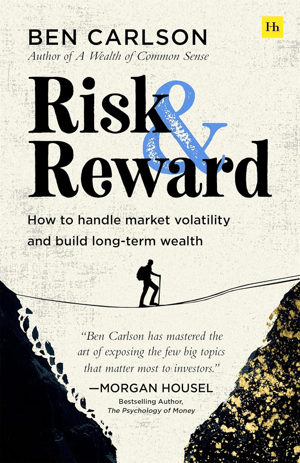
His answer, mercifully, is yes. The book is packed with charts, data, and practical illustrations that drive the point home.
Carlson frames the central question simply: What would happen if you only purchased stocks at the absolute peak of the market? What if you had the worst luck and only invested at the top of the market before a Titanic-level disaster?’
The answer is best illustrated by the story of "Bob," a hypothetical investor cursed with genuinely the worst timing imaginable. Bob puts every ounce of his savings into the market at the top: December 1972, August 1987, December 1999, October 2007, four of the worst entry points in stock market history, each one immediately followed by a crash. He never sells. Not once, through any of it. Forty-two years and $184,000 of contributions later, Bob retires a millionaire, with $1.1 million to his name.
Carlson also runs the obvious counterfactual. Had Bob simply invested his savings steadily as he earned them, rather than sitting on cash for years waiting for the "right" moment, he'd have retired with something closer to $2.3 million, more than double his actual total. Bob's terrible timing didn't ruin him. What cost him was all the time spent waiting on the sidelines beforehand.
The obvious rebuttal from sceptics is: ‘NOW SHOW JAPAN!’ Carlson tackles it head-on, and shows the comparison doesn't hold up: Japan's bubble-era valuations, corporate structure, and policy response were nothing like America's, not even in the same postcode. It's a real caution, but not one that invalidates the case for buy and hold.
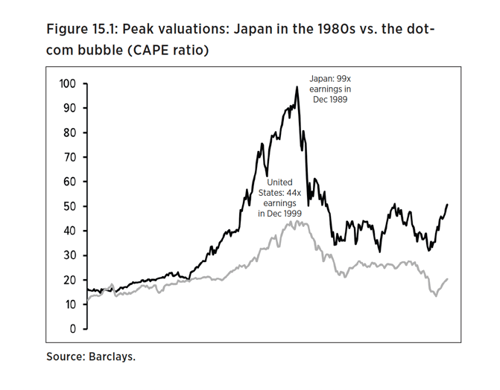
It's a particularly well-timed one to have on the shelf. Given all the chatter about markets being toppy, the Shiller CAPE ratio touched its second-highest reading in over 140 years earlier this year. Whether that resolves into a genuine correction or just more noise, nobody actually knows, Grantham included. Bob's story is the right antidote to the anxiety. The investors who come out ahead are rarely the ones who call the top. They're the ones who stayed invested through the ups and downs. That's hard. But that is the job.
If you’ve ever had a client ask whether now is a bad time to invest (who hasn’t?), this book might just hold the answer.
The Pricing Sprint: 12 Steps to Unlock the Power of Pricing
Jenny Millar, with Ann Padley
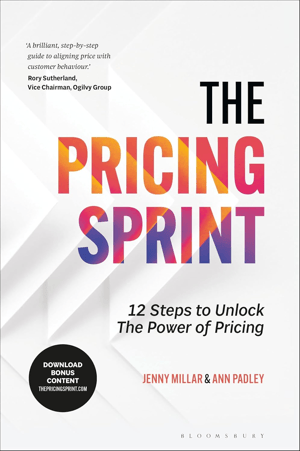
Financial planners obsess about charging the right level of fees, ones that actually reflect the value we bring to a client. We have endless debates on fixed vs AUM fees. And if you go fixed, how do you reflect complexity, value and fairness? Do you index it to inflation?
Jenny Millar, who delivered a brilliant presentation at Adviser 3.0 in May, spent years running pricing at eBay before founding Untapped Pricing. This book, co-written with her colleague Ann Padley, distils that experience into twelve steps designed to drag pricing out of industry debates, and into the real world of how clients perceive value.
Millar and Padley's case is that most businesses, financial services included, treat pricing as either a guessing game or a black box: bolted on at the end of a cost calculation, discounted under pressure, or simply copied from the firm down the road. Their argument is that pricing deserves the same rigour you'd apply to product design. Talk to customers, test it, validate at scale, experiment with the number itself, then measure what actually happened rather than what you assumed would.
For an industry mid-way through what I've been calling the Great Compression which is about to be accelerated by the onslaught of AI, this book will help you think more clearly about your pricing from the vantage point of how clients perceive value and what is likely to endure.
The Art of Spending Money: Simple Choices for a Richer Life
Morgan Housel
If you caught Morgan at Adviser 3.0 in May, you'll know he's just as good in the room as on the page. A natural storyteller who is allergic to jargon.
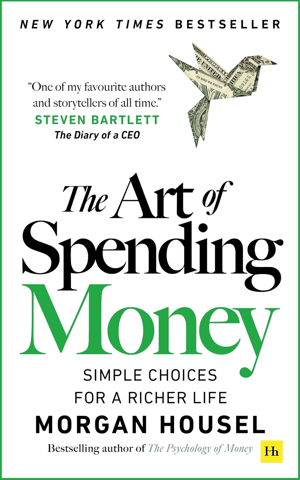
His latest book approaches spending not from a budgeting framework, but as a psychological one. Morgan makes the case that there are two ways to use money: as a tool to build a better life, or as a yardstick to measure yourself against everyone else. Most of us set out chasing the first and end up quietly living the second.
There's no formula at the end of it. What makes one person happy with their spending would strike another as reckless, and both might be right. ‘Most debates about what’s worth spending money on are actually just people with different life experiences talking over each other.’ All behaviour makes sense with enough information.
‘What I like spending money on might make no sense to you. My fears might be your joys. Your goal might be the thing I most want to avoid. There’s a saying: Never make fun of someone for mispronouncing a word, because it means they learned it from reading. As a corollary: Never make fun of how someone spends their money, because they learned it from living. Everyone is a product of their own unique past. To understand why people spend the way they do, you have to dig into their life experiences’
For planners, that's the real takeaway: the job was never really the spreadsheet or cashflow plan. It's helping clients work out what they actually value, then giving them permission to spend on it without the guilt.
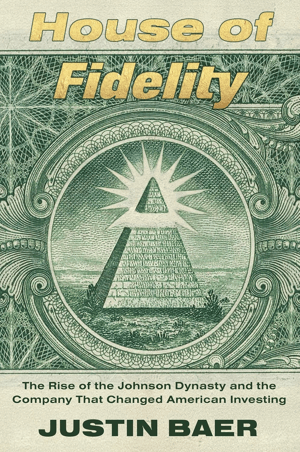
House of Fidelity: The Rise of the Johnson Dynasty and the Company That Changed American Investing
Justin Baer
Wall Street Journal reporter Justin Baer tells the story of the powerhouse that is Fidelity Investments from 1943, when Edward "Ted" Johnson, a Boston trust lawyer with a wandering eye for the market, took over a struggling $3 million fund and built the template for modern retail investing. Ted's genius wasn't picking stocks himself so much as picking the people who could, handing individual portfolio managers real autonomy and trusting their instincts over committee consensus, decades before that became fashionable. He helped create the cult of the star fund manager, with Fidelity as its Mecca.
His son Ned took the reins in 1972 and pushed Fidelity into everything from discount brokerage and retirement account administration, effectively building the plumbing of American retirement investing.
And then, in one of the more fascinating threads of the book, Ned's daughter Abigail, nearly walked away from the whole thing in 2005 when her father tried to sideline her into a role at the foundation, away from the core business. She told him she quit. He blinked. Nine years later she was CEO, then chairman not long after, and Fidelity remains one of the very few giants of American finance still controlled by the family that built it.
It's a story about entrepreneurialism, yes, but really it's a story about how family businesses survive their own succession dramas (or don't).


-1.jpg)