As an advice firm owner, your practice isn’t just a business, it’s your life's work, and you want to ensure that your clients, your team and you are taken care of when it comes to passing the torch.
There is no short supply of private equity backed consolidators looking to buy your business but that may not be the right path for you, especially if you have no plans to leave town after the sale.
You may prefer a management buy-out or an internal succession - but how exactly do you go about funding it? What about an Employee Ownership Trust? And what if you don't want to sell at all?
Our panel of experts has the answers you need to help you make the right decisions for you and your business. We've gathered the brightest minds in the industry to provide you with actionable insights and help you navigate a successful transaction and transition.
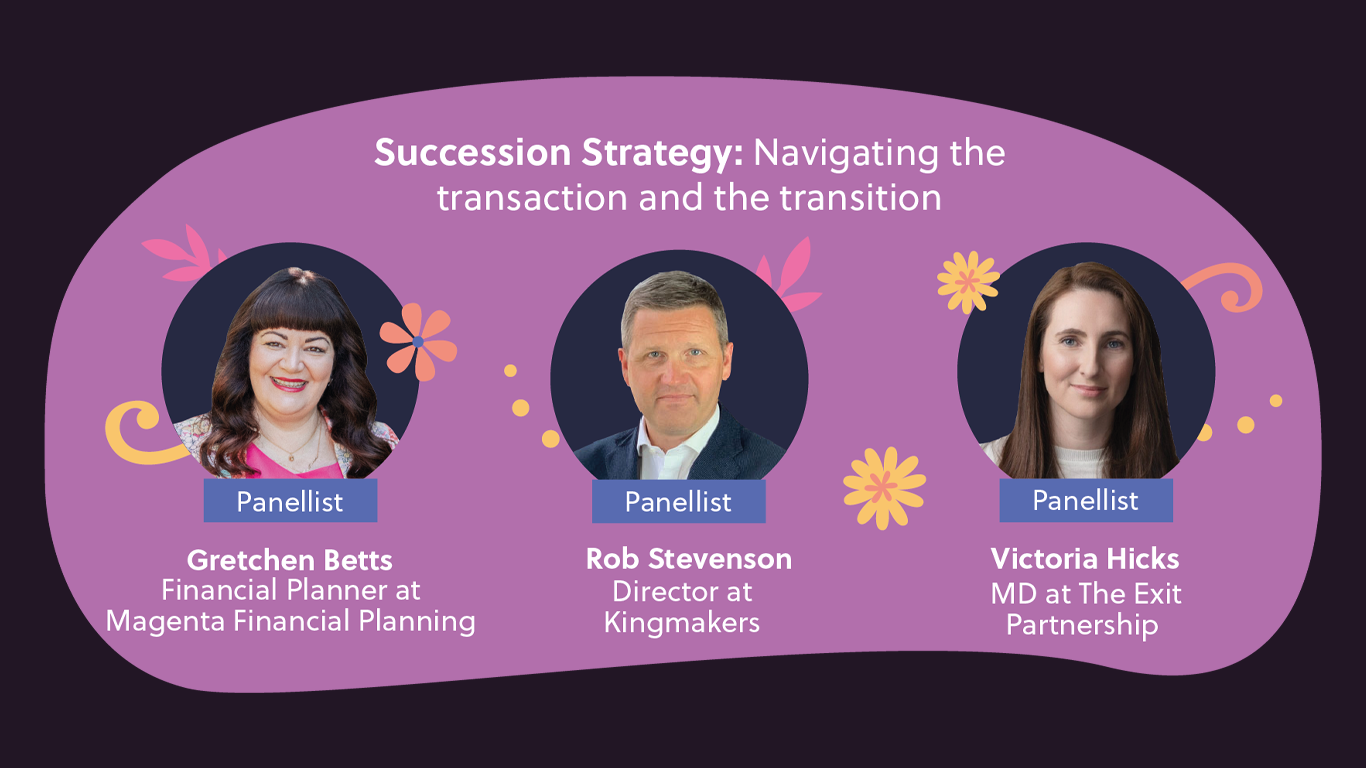
Victoria Hicks, MD of The Exit Partnership. A Chartered Financial Planner, Victoria brings her expertise and experience from her time as an owner-manager of a chartered planning practice and board member of a regional advice firm that sold for a reported £10m. She’s passionate about demystifying the acquisition landscape and providing support to sellers.
Gretchen Betts, MD of Magenta Financial Planning, is a multi-award-winning financial planner, and leader within the NextGen adviser community. She brings a unique perspective from the 'successor's vantage point' after going through an internal succession at Magenta.
Rob Stevenson, Founder of Kingmakers: Rob Stevenson founded Kingmakers in 2005. He has worked on hundreds of M&A transactions of all shapes and sizes and alongside countless firms that have acquired businesses as part of their growth strategies. He provides a level of management expertise that is rare in the financial planning market. He’s also sat in every seat in a financial planning firm, so he really understands how everything works.
Don't miss this exciting opportunity to learn from the best in the business and gain actionable insights on how to successfully navigate the transaction and transition of your business. The right succession strategy is crucial to securing your future, and we have the right team to guide you through it.