
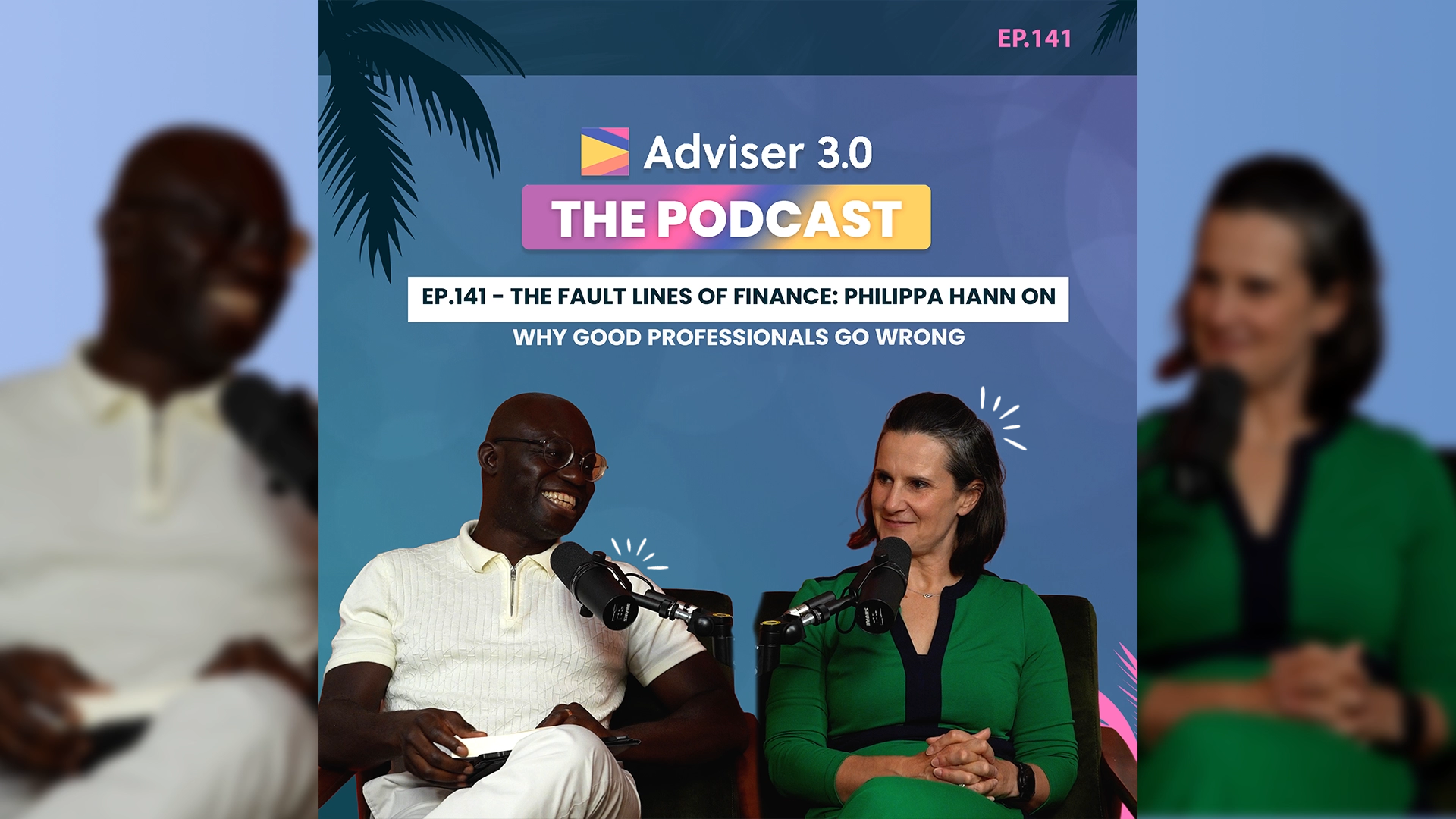
Abraham Okusanya sits down with Philippa Hann, Chief Executive of Paradigm Norton, to unpack The Fault Lines of Finance, her new book with neuropsychologist Dr Moira Somers, and the question at its heart: why do good people do bad things with other people's money?
Why Good People Do Bad Things
For the best part of 20 years, Philippa Hann worked as a litigator in financial services, digging through witness statements, emails and documents behind the scandals that never seemed to stop coming. From the outside, it is tempting to file each one under bad people or greedy people. From the inside, she found the stories were far more nuanced. And as an equity partner and head of litigation carrying plenty of pressure herself, she had felt both the warm glow of a job well done and the quieter discomfort of not quite being the person she wanted to be. That left her with two questions: why does this keep happening, and could it happen to her?
She had the stories and the facts. What she was missing was the psychology, and she found it when she heard Dr Moira Somers speak at a conference. One lunch and one bold message later, the pair were writing a book together. Its central image is a ring of fire: a professional path with safe stretches and dangerous ones, where the ground can open up beneath anyone who isn't paying attention. Finance, she argues, has more of those fault lines than most professions, simply because people work so close to money and money is such a powerful force in our lives.
There are safe bits of the path, there are dangerous bits of the path, and it's really a metaphor for the fact that you can be corrupted without your permission.
The Story We Tell Ourselves
In a nutshell, Philippa's answer is that we don't like feeling uncomfortable. Most of us see ourselves as hardworking, intelligent, moral people who try to do the right thing. When life pushes us into behaviour that doesn't fit that picture, our brains go to work to make us comfortable again. That is cognitive dissonance, and the way it resolves is through rationalisation and justification. We make up a story about why it was okay, and carry on feeling fine about ourselves.
The book opens on a sales floor where everyone knew the deals behind the scenes weren't right. Faced with a choice between paying the rent, hitting targets and belonging to the gang, or sitting with that discomfort, people chose the story. Philippa's point is that nobody in these situations wakes up deciding to do something bad. That is why she frames misconduct the way she does.
This isn't a bad person problem, this is a good person problem. People don't do these big things wrong all of a sudden. It's a slippery slope.
She is candid that she is as vulnerable as anyone. The difference now is that she is better at noticing it. Without that self-awareness, she argues, the small ethical moments that cross everyone's path will eventually catch you out.
Integrity By Design
For leaders, the work is about making the ethical choice the easy one. Philippa boils it down to two questions people silently ask their leaders every day: what does good look like around here, and can I trust what you say? She tells the story of a firm that handed staff the answers to their ethics test so they could get back to making money, then wondered why nobody took ethics seriously. Whatever the values statement said, everyone knew what really mattered.
Her favourite test is the travel policy. Abraham pushes back on whether the C-suite really needs to live by exactly the same rules as everyone else, and her answer is about congruence rather than equality. Different rules for leaders can be fine, as long as you are honest about them and write them into the policy. If you would feel uncomfortable doing that, it might be telling you something.
If your policy says that everyone should travel standard class and you travel first, I can't trust what you say.
Abraham then puts a grey-area expenses dilemma of his own to her, live on the show. Philippa answers with the question at the heart of the book: would you do it for everyone, or is it a special thing just for you? You can't write a rule for every scenario, she says, but it is worth getting clear on the fuzzy areas your firm keeps running into, because clarity spares people from having to decide in the moment. One case study in the book shows how an expenses fraud began with a travel agent's simple mistake, then grew as resentment, long hours and the pressure to keep up with colleagues made each step easier to justify.
Where Ethics Training Stops
Philippa sets out four stages of ethical decision making. The first is moral sensitivity, recognising there is an ethical issue in front of you. The second is moral judgment, knowing what to do about it. Traditional ethics training covers both reasonably well, but in a classroom you are expecting the dilemma. In real life, it arrives as an annoyance on the way to something more important.
What training misses are the last two stages. Moral motivation is putting your standards ahead of the mortgage, being liked by the team, or simply avoiding discomfort. Moral character is holding your ground when someone tells you to come off it and move on. Those can't be taught from a slide deck, which is why the book includes a moral operating system for doing that work on yourself.
Where do you get your character from? Well, it has to come from within.
Relationships At The Core
At the firm level, integrity by design also means giving people the time, tools and support to do their jobs properly. When workloads become impossible, the natural human response isn't to tell the boss it can't be done. It is to find a workaround, and that is where ethical infractions creep in.
The most important element of all, Philippa argues, is relationships. Psychological safety comes from them, and it is very hard to have a difficult conversation with someone you have never had a good one with. Because ethical issues arrive unexpectedly and often, a line manager you can turn to and say "I don't know what to do here" can stop a slippery slope before it starts.
I really truly believe that the centre of a company that has integrity baked into its very core is the quality of the relationships between the people in that company.
Pause And Decide Who You Are
Abraham asks whether a book like this only reaches the good guys. Philippa's answer is that rogues are not necessarily born, they are made, so her real audience is early-career professionals and the people who manage them. In her view, UK advice is in a far better place than it was, but there are still scandals to come, and more regulation alone won't fix a problem rooted in motivation and character.
The personal toolkit starts with knowing your vulnerabilities. Perhaps you are a people pleaser who struggles to say no to a client, or simply exhausted and not making your best decisions. Next, write down your non-negotiables. Hers are that she doesn't lie, doesn't pretend to know something she doesn't, and apologises when she gets something wrong. Finally, keep a few back-pocket phrases ready for the moment temptation strikes. A simple "I'm sorry, I find this client really difficult, can you help me?" changes the whole conversation.
Above all, she wants professionals to treat that stomach lurch as information rather than something to suppress. We feel before we think, and the feeling is a signal.
Recognise the emotion you're feeling, not as a good thing or a bad thing, but as a signal. And in that moment, you can pause and decide who you are.
She closes with a challenge to the whole profession. Ask most people what business is for and they will say making money. Philippa disagrees. Businesses exist because society permits them to, and in return they provide livelihoods, opportunity and solutions to real problems. The purpose of business is to serve society, and for financial professionals deciding what good enough looks like, that is the standard to act by.